


| Head of the Department |
: |
Prof. Anil Kumar Jain |  |
| Contact No. | : |
+91 9414349114 | |
| Email Address |
: |
This email address is being protected from spambots. You need JavaScript enabled to view it. |
Overview of the Department
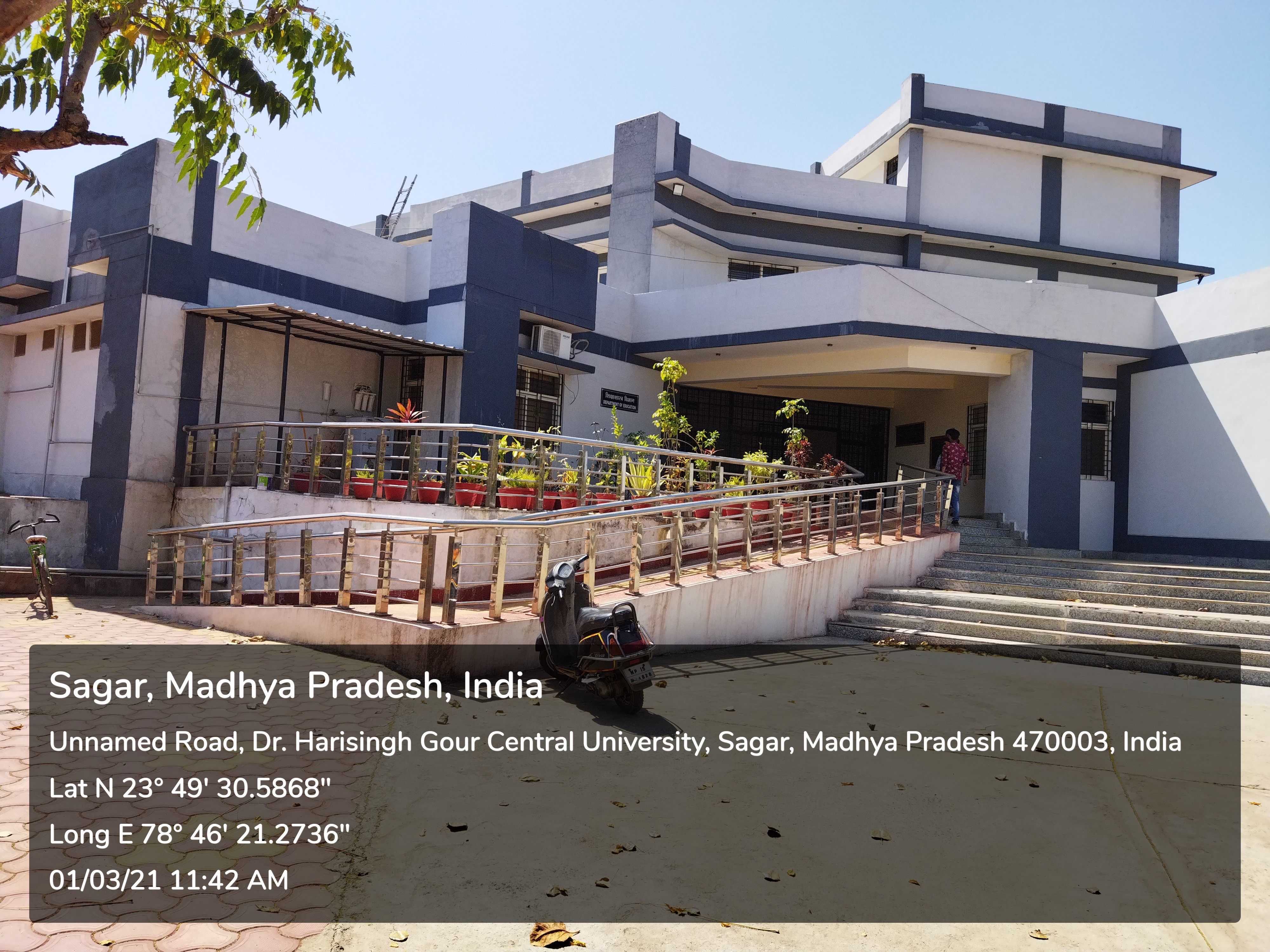
The Department of Education came into existence initially as Post Graduate Basic Training (PGBT) College, Government of Madhya Pradesh, in 1961. The PGBT College was also called the Government College of Education (Shaskiya Snatkottar Shiksha Mahavidhyalaya). It was a famous teachers' training institute in the Sagar district of Madhya Pradesh running B.Ed., M.Ed., and Diploma training programs. On 19 June, 1967, the Madhya Pradesh government handed over this college through letter no. Trgk/67/2053 to Saugor University with all its physical and human resources and was renamed as ‘University College of Education.'
After the upgradation of the university into a central university in 2009, this university college of education with all its entities and amenities was transformed into a department of education on 27 March 2011 (Ref: Item No. IV SA 1, Meeting of AC held on 27.12.2010). In December 2015, the Department of Education received a grant worth Rs. 8.76 Cr. under the Pandit Madan Mohan Malviya National Mission on Teachers and Teaching (PMMMNMTT) scheme of the Ministry of Human Resource Development (now Ministry of Education), Government of India, New Delhi, for the upgradation of the Department of Education into the School of Education. Two centers, namely the Center for Pre-service Teacher Education (CPSTE) and the Center for Professional Development of Teacher Educators (CPDTE), are functioning under the School of Education (Item no. AC: 12:2 (3) of the Academic Council Meeting held on July 4-5, 2016). The Department of Education offers undergraduate, postgraduate, and doctoral programs with a choice-based credit system.
 |
To emerge as a center of excellence in teacher education, educational research, innovation, and community engagement by nurturing competent, ethical, inclusive, and socially responsible educators committed to nation-building, sustainable development, and global educational transformation in alignment with NEP 2020 and Indian Knowledge Systems. |
|
|
|
